Showing posts with label Fiction. Show all posts

The Storied Life of A.J. Fikry


If you haven't heard about Gabrielle Zevin's new novel, The Storied Life of A.J. Fikry, it was only a matter of time. Because book lovers everywhere know a good thing when they read it and this novel is the real deal. Word tends to spread quickly.

A.J. Fikry owns Island Books, the small, independent bookstore that serves the tiny Northeast island of Alice. A.J. isn't a particularly happy man, having lost his beloved wife and unborn child in a car accident not too long ago. He is also very persnickety and opinionated when it comes to books which, coupled with his anti-social tendencies, make running a community bookstore a challenging endeavor at best. In fact...
"Despite the fact that he loves books and owns a bookstore, A.J. does not particularly care for writers. He finds them to be unkempt, narcissistic, silly, and generally unpleasant people. He tries to avoid meeting the ones who've written books he loves for fear that they will ruin their books for him."
And so, it probably goes without saying that A.J.'s life is forever changed the night he discovers his bookstore unlocked and a light on and....a baby girl named Maya sitting alone in the children's section. With a note telling A.J. that the Maya's mother was leaving her with A.J. to be raised around books. 

And when the mother's body washes ashore and something within A.J. tells him that adopting Maya is the right thing to do, well, A.J., Island Books, and indeed most of the small population on Alice Island is about to experience the wonder of change. And the best part? Most of these changes we get to experience through books.


Not only is each chapter prefaced by a short review of a short story A.J. wants Maya to read, but books are an integral part of every character in the novel. From the publishing house sales rep Amelia ("She can usually find something positive to say about a book or, failing that, the cover or, failing that, the author or, failing that, the author's website") to the local police Chief Lambiase ("At first, he had mainly bought mass-market paperbackets - Jeffery Deaver and James Patterson (or whoever writes for James Patterson) - and then A.J. graduates him to trade paperbacks to Jo Nesbo and Elmore Leonard. Both author are hits with Lambiase, so A.J. promotes him again to Walter Mosley and then Cormac McCarthy").

The Storied Life of A.J. Fikry is obviously a book for book lovers. So what more can I tell you save but to read it? You'll enjoy it. Really, you will.

I'll leave you with perhaps my favorite passage (it's difficult to choose...there were dozens I had marked by the time I turned the final page)......

"Mr. Fikry, don't you turn those Omar Sharif eyes of yours on me. I am outraged at you." Mrs. Cumberbatch pushes past him and slams a plump paperback on the counter. "The book you recommended to me yesterday is the worst book I have read in all my eighty-two years, and I would like my money back. 
A.J. looks from the book to the old woman. "What was your problem with it?"
"Problems, Mr. Fikry. To begin with, it is narrated by Death! I have an eighty-two-year-old woman and I do not find it one bit pleasurable to read a five-hundred-fifty-two-page tome narrated by Death. I think it is a remarkably insensitive choice." 
A.J. apologizes but he is not sorry. Who are these people who think a book comes with a guarantee that they will like it? He processes the return. The book's spine is broken. He will not be able to resell it. "Mrs. Cumberbatch," can cannot resist saying, "it appears that you read this. I wonder how far along you got."
"Yes, I read it," she replies. "I most certainly did read it. It kept me up all night. I was so angry with it. At this stage of my life I would rather not be kept up all night. Nor do I wish to have my tears jerked at the rate at which this novel jerked them. The next time you recommend a book to me, I hope you will keep that in mind, Mr. Fikry."
"I will," he says. "And I do apologize, Mrs. Cumberbatch. Most of our customers have rather liked The Book Thief."

Title: The Storied Life of A.J. Fikry
Author: Gabrielle Zevin
Publisher: Algonquin Books
Date: April 1, 2014
Pages: 272
Source: Publisher

The Intern's Handbook


There is a lot to love about Shane Kuhn’s debut novel, The Intern’s Handbook. The concept itself first and foremost. John Lago, age twenty five,  is a professional hitman employed by HR, Inc. about to embark on his last assignment before retirement. Because at HR, Inc., all employed assassins do their jobs under the brilliant cover of nameless, faceless interns.

Whether out of a sense of responsibility, nostalgia, or maybe even ego, Lago has written this handbook to pass on to the up and coming assassins - always orphans, always those who grew up abandoned and unloved - who will follow in his legendary footsteps, sharing tips and tricks of the trade for those who want to live to see the mandatory retirement age of twenty five.


Kuhn gives his protagonist a wicked sense of gallows humor and enough of a dysfunctional childhood to justify his sociopathic career path. John Lago is may be a killer, but he’s a killer with a heart. The humor and fast plot pace and twists should have been enough to make this novel a winner on all levels. Yet it still fell short and this is why:

John Lago’s self-deprecating humor is what hooks the reader from the very first chapter. Confiding that the assassin’s life is nothing like Hollywood portrays it to be is a large part of Lago’s charm and character. So when the author then places Lago in scenes that are exactly like Hollywood portrays them, both the character and the story loses authenticity. The novel then becomes just another shoot ‘em up, beat ‘em up, blow ‘em up, testosterone filled blood bath. Which is a shame given the potential of the first few chapters.

The upshot? It’s a library checkout for a few good laughs and an author worth keeping an eye on as he hones his craft.


Title: The Intern’s Handbook
Author: Shane Kuhn
Date: April 8, 2014
Publisher: Simon & Schuster
Pages: 288
Source: Advance Reading Copy

The Wives of Los Alamos


I haven't quite figured out my obsession with historical wives. While I reassure myself that my interest is purely historical, I suspect that somewhere underneath all of that is a need to connect with these women of a bygone age, finding our commonalities while simultaneously assuring myself of the advantages I must surely now enjoy in this following century. I should, after all, be able to experience a small amount of smugness with societal progress, right? After all, for these women the pinnacle of success was ensuring a nice pot roast on the table and presentable children by the time their all-conquering husbands returned from making history. It was their husbands who defined them. I'd like to wallow in pretend conversations with these women, telling them about my working day before preparing dinner for my family. You know, the one where I captained a $30 million jet airliner across the country and back.

Yet if I'm perfectly honest with my feminist self, it really goes much deeper than that. I reach for these books yearning to find something in these women that proves that they really are me, simply constrained by the era. Deep down, I want less to gloat than I do to find that spark inside of them and mourn the circumstances that doused it in sewing circles, bridge clubs, and above all, adoring and unquestioned support of a spouse whose glory simply reflected well on their wives.
There is one very important difference between Koppel's The Astronaut Wives Club and Nesbit's new release The Wives of Los Alamos: one is non-fiction and one is fiction. And as it turns out, that made all the reading difference.


The Astronaut Wives Club made nearly every Best Non-Fiction list of 2013. Here Koppel makes a concerted effort to examine the Mercury, Gemini, and Apollo Project wives, these women who were married to the first American men to orbit the Earth, walk in space, and finally reach the moon. 
The scope of Koppel's work here started off small and manageable with the selection of Mercury's astronauts (1959-1963). She does a fine job providing fascinating detail into each of the original seven astronaut's wives. Their childhoods, marriages and the initial days of Mercury are well documented and Koppel does a fine job defining each wife with her own unique personality. 

As the book progresses and the U.S. Space Program goes on to incorporate more astronauts into the Gemini and Apollo Projects, however, Koppel quickly becomes overwhelmed and the unique voices of the wives are lost in a sea of multitudes. What began with distinct women melts into muddles of generalities. I lost interest and found myself desperately wishing the story had simply remained with the original seven Mercury wives. I didn't want generalities - I wanted their stories.

Ultimately the book was an admirable effort but left me wanting so much more. And were it not for this void I might never have picked up TaraShea Nesbit's new novel, The Wives of Los Alamos. Although Nesbit's work is fiction, I knew it drew from a plethora of primary source material on the scientists and their families who were secretly whisked away during WWII to a top-secret location in New Mexico to work on creating the most destructive weapon the world had ever known.


By using fiction, Nesbit was able to use the primary source material to infer what I was most looking for: what these wives were thinking and feeling. She did so using a most unusual technique: first person plural point of view.
"And later, as we got to know one another better, as we became bored, as we continued to dislike ourselves, or as we became frustrated with being stuck in this town for so long, or we could no longer hold in the secrets we did know, we said the obviously not nice."
This point of view, used throughout an entire novel, takes some getting used to. But here's the important thing: it's not a gimmick. It is very important to understanding the novel's theme, that these very different women from very different backgrounds were brought to Los Alamos and forced to become the same anonymous wife. This is key. And Nesbit captures it beautifully. 

The incredibly secrecy surrounding the Manhatten Project is largely forgotten today. But these families were completely uprooted, transported to Los Alamos and were unable to tell their extended family, friends, their entire lifetime support system where they were going, how long they would be there, or why they were even gone. Once there, they lived under an intense veil of secrecy - many of their names were even changed - while simultaneously being thrown together with other wives in the closest of physical living conditions. It was a dichotomy that took the severest of psychological tolls and proved that these women were as strong and intelligent and resourceful as their husbands.

If you want to immerse yourself in experience, Nesbit's book The Wives of Los Alamos is the clear winner here. 

Title: The Astronaut Wives Club
Author: Lily Koppel
Publisher: Grand Central Publishing
Date: June 2013
Pages: 288
Source: Library 
                                        *******************************
Title: The Wives of Los Alamos
Author: TaraShea Nesbit
Publisher: Bloomsbury USA
Date: February 2014
Pages: 240
Source: Library

A Burnable Book


Holsinger's debut novel, A Burnable Book, hits bookstores everywhere today and this is one book that merits close attention. A literary thriller that forces the reader to pay close attention and hang on for the ride, A Burnable Book takes us to Chaucer's London - 1385 - where a heretical book has gone missing and everyone from the highest nobility to the lowest prostitute wants to find it, albeit for different reasons.

John of Gaunt, Duke of Lancaster and Uncle to King Richard II

Narrated by John Gower, a close friend of Chaucer and notable English poet himself, the importance of the missing book is gradually revealed throughout the novel. From the treason-tainted halls of John of Gaunt and his infamous mistress Katherine Swynford waft the seeds of rebellion against the newly-crowned English King Richard II, where the missing book could provide information that could elevate Gaunt to the crown or destroy him forever. 

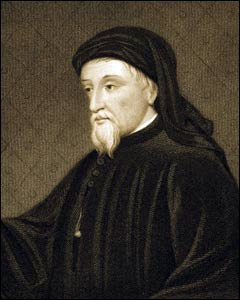
Chaucer

Poet Geoffrey Chaucer has his own reasons for desperately seeking the missing book but discerning those reasons is more difficult than navigating the back streets of 14th century London. Whatever his reasons, he is willing to manipulate anyone and everyone - risking lifelong friendships in the process - in order to get his hands on the missing book.

The book proves even more elusive when it accidentally falls into the hands of a common street prostitute - one smart enough to know what she has is valuable, even if she isn't entirely sure why. The chase is on.....and people are about to find out that their life is cheaper than a book.

The end result is a helluva ride through medieval London, thanks to Holsinger's intense knowledge of the period - he is a medievalist professor at the University of Virginia's English Department - which results the most fun a reader can have while receiving a history lesson. Nothing about this novel is spoon-fed; keep up or drop out of the game. But I can confirm that it is worth your while to keep up - this is one of the best historical thrillers I have yet to read. Smart, fast-paced, and requiring reader intelligence....a little slice of heaven right here. Highly recommended.


Title: A Burnable Book
Author: Bruce Holsinger
Publisher: William Morrow
Date: February 18, 2014
Pages: 464
Source: Publisher 

Worthy Brown's Daughter

Behold the historical legal thriller. Author Phillip Margolin, popular for his contemporary legal thrillers, has written a new novel and this one, while featuring all the legal twists and turns his work is so famous for, features something new: it is set in the 19th-century.


Margolin actually began writing this novel over twenty years ago while still a practicing attorney in the 1980s. While performing legal research, he stumbled across an old historical case from the 1800s, Holmes v. Ford, in which a man brought a family of slaves with him when he moved to Pacific Northwest promising them he would free them after he established his farm in Oregon, a state that while prohibiting slavery was also quite hostile towards blacks at the time. But Mr. Holmes didn't entirely keep his promise and only freed a portion of his family of slaves, keeping some of the children, one of whom died under his dubious care.  If the family wanted their remaining children back, they needed a lawyer and a damned good one. And he needed to be white. 

Historical tidbits like these create great novels and that is just what Margolin did with Worthy Brown's Daughter. He fictionalizes this riveting case, but includes so many real characters - including the only United States Supreme Court Justice to be arrested for murder while sitting on the bench - that it reads like a taut true-crime book. Perhaps most disturbing is the sharp reminder of our own country's path towards civil rights, most of which we associate with the Southern states and rarely give a thought to its evolution in the West.

For those accustomed to Margolin's thrillers, there are plenty of good guys and bad guys to go around. And our brilliant attorney who comes to the aid of the dispossessed ex-slaves is, of course, utterly brilliant. Do the good guys win? Well, as with anything to do with slavery and civil rights, the answer is somewhat murky. You can win a battle, but that doesn't mean you've won the war. Nevertheless, Margolin's novel is inspiring and a rollicking good read.


Title: Worthy Brown's Daughter
Author: Phillip Margolin
Publisher: Harper
Date: January 21, 2014
Pages: 352
Source: Publisher

It's FLAVIA DE LUCE Day!


Oh yes. Today is the day. Book Six.

If you're not reading this fantabulous series by Alan Bradley, feel free to go about your day completely unaware of the wonderousness that is the world of Flavia de Luce. But if you are, well then...you are about as happy as a pig in poop that today is the official release day of Book Six, The Dead in Their Vaulted Arches. And you're probably not even reading this blog. You've probably got your nose buried in Book Six. 

Well good on you, I say. (It's sooooo good!)

For those of you who haven't yet delved into Flavia's world, I suppose a few words would not be remiss. The Flavia de Luce books are, ostensibly, considered cozy mysteries. But I have yet to meet one fan who reads them for the mysteries they contain. We read them to get lost in Flavia's world. Flavia de Luce is a mere eleven year old girl growing up in the rural English countryside in the year 1951. She lives with her family in their dilapidated family estate of Buckshaw. While the de Luce family name is a revered one in England, their financial situation is reduced and the estate is going to ruin. Flavia's quirky family includes her two elder sisters Ophelia and Daphne, neither of whom she gets along with, and her very remote, very stiff-upper-lip father. Her mother, Harriet, is a hazy figure neither Flavia nor the reader get to meet, having disappeared in a tragic Himalayan climbing expedition while Flavia was just a toddler.


Being largely left to her own devices, Flavia discovers a chemistry lab in one of Buckshaw's numerous closed-up wings and commandeers it as her own. Her self-taught adventures in chemistry are a large part of her charm and humor and oftentimes lead her down paths she probably ought not go down. Each character - her sisters, her father, the two household servants who are really more like family, the plethora of townsfolk who populate the novels - is endowed with such endearing, funny, and quirky traits that it is nearly impossible not to fall in love with them.

As much as I love the characters, the setting, and nearly everything about the Flavia de Luce stories, I will admit right here and now that I very nearly gave up on these books after the fourth novel in the series. (Gasp!) Here was the problem: the author chose not to age Flavia over the course of these books. As a result, by book four we had an eleven year old girl who had seen four fairly gruesome crimes all in a single year and all occurring in the same sleepy little English town. This was stretching even my patience.

But then the author did the unthinkable: he dropped a literary bomb in my lap at the end of book five (literally the last page...my jaw dropped). I spent the rest of 2013 impatiently waiting for book six. I couldn't wait. And was it worth it?

Yes. Yes. And yes. It wasn't at all what I expected (again, Bradley made my jaw drop, this time on the first page), but it was a revival of the Flavia de Luce series in a way I could never have imagined. Bradley has opened so many new doors for Flavia that waiting for the next book will be agony....and there are very few series that I am impatient for the next arrival.


So kudos to Alan Bradley who deserves an award for the Best Revival of What Was Already a Most Excellent Series.


Title: The Dead in Their Vaulted Arches
Author: Alan Bradley
Publisher: Delacorte Press
Pages: 336
Series: Flavia de Luce, Book 6
Source: Publisher

Mayhem


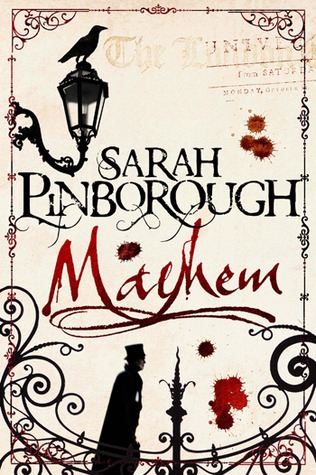
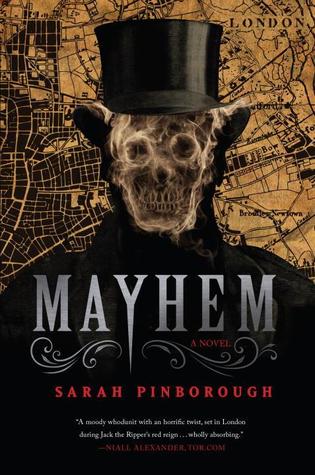
Confession: I'm misleading you already. See that gorgeous cover up there? It's enough to make a cover whore like myself stop, stare, and covet. But I have good news and bad news. The good news is that the story is completely worthy of this gorgeous cover (I'll get to that part in a few moments). The bad news is that this the UK cover. We heathens here in the Colonies were not deemed worthy of such gorgeousness and instead were graced with this:


Is it any wonder we rebelled against King George III? I mean, really. If taxation without representation and unattractive book covers were to be our lot in life, what did England expect?

Alright, assuming it is what's inside the cover that truly counts (and yes, it is), Mayhem is a deliciously creepy foray into the dark world of Victorian London where the city is frozen with fear as Jack the Ripper terrorizes Whitechapel. But London in the late 1880s was also victim to another vicious killer now largely lost to history. Dubbed the Thames Torso Murders, dismembered female victims began showing up in the Thames river throughout London beginning in May 1887. An astute police surgeon, one Dr. Thomas Bond, was the first to recognize that these corpses showing up in the Thames had been dismembered by someone with surgical skill and training.


Author Sarah Pinborough has unearthed this lost and disturbing tidbit of history and turned it into a compelling fictional account of Dr. Bond's investigation into the Thames Torso Murders. 

Admittedly, this was an interesting journey for me. I had never read any of Pinborough's work before and was hesitant to pick up what I - erroneously, as it turns out - thought to be yet another Jack the Ripper novel. Instead of boredom, I found myself drawn in from the very first page into the thick, damp fog permeating the Gothic atmosphere of the novel as the squalid conditions of the less fortunate side of Victorian London's population immediately came alive. 

Jack the Ripper, thankfully, takes the backstage to our protagonist - Dr. Thomas Bond himself - as he struggles with the limitations of the times to find the monster who is dismembering victims and dumping them in the Thames. Yet in Pinborogh's skillful hands, even the murders themselves are secondary to the character of Dr. Bond. Possessed of a brilliant mind, his empathy with victims of London's poor and disenfranchised is not an asset but a demon that haunts his every moment. How the ugliness of his world changes him and his attempts to escape the torture it inflicts upon him is a vital part of the story. Dr. Bond is a necessarily flawed character and his deterioration mirrors the investigation he doggedly pursues.

And now, for the twist. Just to throw me off balance, Pinborogh tosses in a touch - just a teensy touch, mind you - of the supernatural. Think of it as a sprinkle of garnish on a well-made dish. Too much would ruin the meal. Too little and the chef shouldn't have bothered. But the perfect small amount? Ahhhhh. Nicely done.

I've heard through the grapevine that Mayhem is to be the first in a series to feature Dr. Bond. If so, Pinborough can count me in for the ride. Nicely done. Hits bookstores tomorrow. 


Title: Mayhem
Author: Sarah Pinborough
Publisher: Jo Fletcher Books
Date:  January 14, 2012
Source:  Publisher

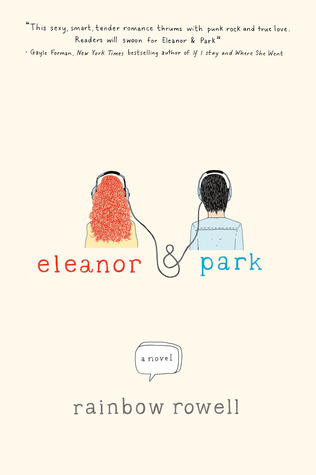
Review: Eleanor & Park


Whenever there is a lot of hype and publicity surrounding a book release, I've found that it rather suits me to wait a few months and let the dust settle a bit before I actually pick up the book.  This tends to prevent the dreaded book-disappointment-due-to-inflated-expectations syndrome, a horrible situation I've fallen prey to more than once and largely caused by over-exuberant marketing departments making promises they simply cannot keep. (Remember Night Circus? Ahem, case in point. I'm still waiting for my money back on that one.)

And so I've learned patience.

No way was I running out and grabbing the new Rainbow Rowell novel everyone was talking about early last spring. Nope. Not me.

Eleanor & Park was released back in February of this year to a wildly enthusiastic young adult audience. While this novel easily fits the genre, now that I've read it I would suggest that it easily transcends genre boundaries and belongs in the adult literature category as well.

Eleanor is a new transfer student to the local high school in Omaha, Nebraska and it is abundantly clear to Park - and everyone else - that she is never going to fit in with her odd fashion sense and the huge chip on her shoulder. Furthermore, Eleanor couldn't care less what people think of her. They can all go to hell in her estimation. Her anger with the world might be easy to write off as typical teen angst, but Eleanor has a very good reason to be furious with the world. Poverty, abuse, and neglect form the foundation of her home life and it is this dirty little secret she is determined to hide from the world.

Enter Park. A normal teenager, if ever a word could be applied. As an Asian-American growing up in what is quite possibly the whitest city in America, Park is no stranger to feeling like an outsider. Perhaps this is where he finds common ground with Eleanor. Or perhaps he is simply the first person who has ever treated her with a modicum of respect. Whatever the reason, Park and Eleanor fall in love. And if you dust the cobwebs off your memories of that time in your life, I'm pretty sure you will recall the intensity of that first love.

And now we get to the heart of the story. Because at this point, Eleanor & Park could have been just another teenage love story in which the author manages to capture the intense, yet predictable emotions on paper rather well. In other words, just another John Green novel. This novel, however, takes your reading experience much, much further. Take away the predictability of that John Green book you love so well, but leave the emotions laid bare. Now throw in an uncomfortable, but necessary, examination of societal mores and values (think: Lionel Shriver) and the end result is a novel that is a contender for one of the best of the year, if not one of the best young adult books ever penned.

Yes, I said that. Ever penned.

Because Eleanor & Park is not simply a story about first love. It is about acceptance, it is about choices, it is about the hell adults inflict upon our children, it is about poverty, it is about abuse, it is about bullying, it is about shame. It is about all of these issues - and more - laid bare for all of us to see. This is why we read books. And if we are very patient, every so often a novel like this comes along to reward us.

Eleanor & Park is one of those stories that, with just a few different choices by the author, would have been just another mundane book sitting on the shelf next to a hundred others exactly like it. Instead, a brilliant young woman turned this story into an unforgettable stamp upon the reader's conscious. Buy it. Borrow it. Steal it. Whatever. Just get your hands on a copy at some point. Okay?

Title: Eleanor & Park
Author: Rainbow Rowell
Publisher: St. Martin's
Date: 2013
Pages: 336
Source: Library Audiobook Download

Rating: 5 Stars. And then some.

Z: A Novel of Zelda Fitzgerald and a Digression of Epic Proportions


After waiting weeks and weeks on the library hold list for Therese Anne Fowler's novel, Z: A Novel of Zelda Fitzgerald, my number finally came up. And overall it was worth the wait. Fowler fictionalizes the wild and crazy life of F. Scott Fitzgerald and his infamous wife, as told in first person by Zelda.


Beginning with her first meeting of Scott as a young southern debutante, Zelda takes us through the tumultuous early years of their unconventional marriage as Scott struggled to establish himself as a writer of merit on the literary scene in New York City. Living far beyond their means led to extraordinary years as expats in Europe and although they couldn't know it at the time, Scott and Zelda would come to define this Lost Generation of artists in the wake of the Great War - an entire generation who never quite knew who or what they really stood for.

Fowler, understandably, sympathizes greatly with Zelda. This becomes especially apparent in Zelda's later - and most fascinating - years when she suffered the most. Some, of course, claim she suffered emotional breakdowns. Given the time period, when women were still legally the property of their husband, I find the breakdown theory questionable, but the fact remains that she did exhibit some, ahem, odd behavior. But heck, don't we all now and again, right?

Either way, Fowler does a fine job and the novel is well worth your time and effort.

I was perhaps most drawn to this novel not because of any special interest in Zelda herself, but because it is simply impossible to separate Scott and Zelda Fitzgerald from that absolute nemesis of the literary world, Ernest Hemingway. Hemingway, or as I like to refer to him, Misogynist Bastard, despised Zelda Fitzgerald with every fiber of his being. And being close friends (or as much of a friend as a selfish egotist can possibly be) with Scott Fitzgerald, he liked to take every opportunity he could over the years to encourage his "friend" to ditch the flapper who was holding him and his writing back. Um, okay.


No one knows why Misogynist Bastard hated Zelda so much, although there are plenty of theories to go around. But the fact is that Hemingway hated most women that crossed his path. Oh, he liked them enough to bed them, maybe even marry a handful if it suited his needs at the moment (if you haven't read Paula McLain's The Paris Wife, this is a fairly good read that ties in with Fowler's novel as it covers the Misogynist Bastard's first wife, Hadley). But if you've investigated the life of Ernest Hemingway, you know that it is difficult, if not downright impossible, to find any likable personal qualities about the smarmy little shit.

And I'm not afraid to admit that this has most certainly tainted my interpretation of his literary work.  For instance, my good friend James over at The Scholar's Fane (who, by the way, is about a thousand times smarter than me when it comes to this literary stuff) recently explained Hemingway to me:
He's an enigma, to be sure--in many ways an awful example of a man, all things considered, whose work can seem overly simplistic and unexpressive, and yet...as his "iceberg theory" purports, so much is intimated by that forceful brevity, mountains of implication lurking beneath its surface. And in much the same way, underlying the thick layer of chauvinism and braggadocio lay a lust for life, passion for literature, and dedication to the craft that was at many times unparalleled, unrivaled by even the best of Hemingway's contemporaries.
My response? He sucked. Brevity became his signature because the man had NOTHING TO SAY.

We then went on to talk about Misogynist Bastard's Moveable Feast, which James loved:
Moveable Feast was such an excellent read because it was much the same as his fiction, which was often based in fact, but without that affected veneer of fiction. It's a more direct insight into the man, as well as the era. The expat literary scene in Paris at the time--with Gertrude Stein, F. Scott Fitzgerald--was truly remarkable, nigh-legendary, in terms of creative output. Hemingway introduces a degree of humanity otherwise lacking in the typical romanticized view of those lives and times.
My response? Yes, if you call a degree of humanity asshole-ishness.

So the moral of this conversation, I suppose, is that you need to visit The Scholar's Fane for high-minded literary discussions that are capable of separating the author from their work.  Because I seem to be incapable of doing so.

At least when it comes to Misogynist Bastard.


I told you this was going to be a digression of epic proportions. You were warned.


Title:  Z: A Novel of Zelda
Author:  Therese Anne Fowler
Date: 2013
Pages: 384
Publisher: St. Martin's
Source:  Library Copy

Rating:  4 good stars

Review: Mother, Mother


You aren't one of those Pinterest mothers, are you? You know the kind I mean, the ones who throw the perfect color-coordinated birthday parties for thirty six year olds while simultaneously serving as PTA president, whipping up paleo meals served promptly - and with appropriate garnish - at five each evening, and still fit two hours at the gym with makeup that apparently never comes off? I hope not. Because motherhood perfection like that gives me the heebie-jeebies.

okay, so I hate Pinterest, but I am so trying this for Little Kid's next birthday party....whatev
Enter Koren Zailckas' new novel, Mother, Mother. You might remember Zailckas from her previous best-selling non-fiction work Smashed. This time she has dipped her pen in the fiction fountain and come up with some serious whackadoodle. For me, it was love at first sight.

What we have here is one serious Pinterest mom.  Okay, so she doesn't exactly spend her time pinning, at least not in these pages, but she might as well be.  To the outside world, Josephine Hurst is the perfect mother. Everything she does is utterly perfect. And she's not ashamed of that perfection.

Except....(and this is the part I revel in)....

except she is so not perfect.  The woman is whackadoodle. (Okay, okay, so the official psychological world would label it Borderline Personality Disorder slash Narcissism, but I'm allowed to say whackadoodle because I like the word. Try it, it just rolls off the tongue.) This smugness I feel as I find out that ever-so-perfect Josephine is a whack job turns out to be somewhat mitigated as the damage she is inflicting upon her family begins to unfold.  Teenage children, a husband who may - or may not - be adding to the family problems all begin to boil over, cumulating some very dire consequences for everyone involved.

Needless to say, the tension remains taut throughout the novel. Alternating points of view between two of Josephine's children, the pace moves quickly and events change the reader's opinion often. Others might call this novel a page-turner, but I'll just call it a damned good read.

Title: Mother, Mother: A Novel
Author: Koren Zailckas
Publisher: Crown
Date: September 17, 2013
Pages: 384
Source:  Publisher
Rating:  4.5 Stars....we loves us some whackadoodle

Review: Mrs. Poe


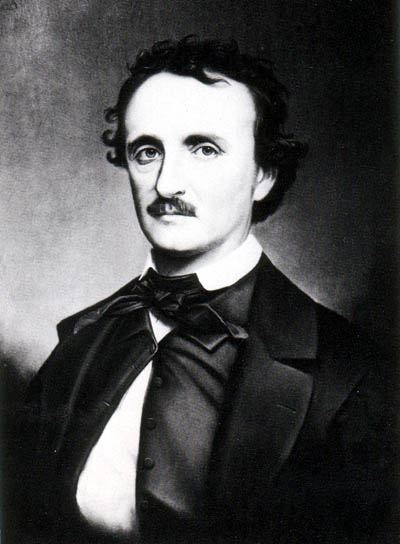
Author Lynn Cullen's newest novel, Mrs. Poe, is a fictional look at the alleged intimate relationship between two 19th century literary powerhouses: Edgar Allan Poe and Frances Osgood.  Both trapped in unhappy marriages during a time when divorce was simply not an option, Poe and Osgood were a central part of New York's literati...one would become a household name, the other would largely be lost to history.

Edgar

As the title suggests, the novel takes great pains to encompass the ramifications of the literary couple's affair, specifically the emotional damage done to Poe's young wife, also - for those of you who know your Poe history - his first cousin.  A beautiful young woman (Poe married her when she was only 13 years old) Eliza Poe was not known for her *ahem* mental stability. Needless to say, Cullen puts this to good use throughout the novel (what author worth her salt wouldn't?) and Eliza flits across the pages as creepy as anything Poe himself ever wrote.

Frances
Our protagonist, Frances Osgood, was herself an abandoned wife with two young daughters to raise living off the charity and goodwill of her New York friends. Her relationship with Poe was mysterious and while no one has ever been able to definitively prove she was sexually involved with Poe, it seemed a good bet at the time since he was known to eviscerate every other writer and poet he came across except, curiously, Frances' work. Given that she wrote poems about flowers and love (not exactly Poe's cup of tea), you can see where the rumors might have started.

Cullen gives us a sympathetic Frances who knows darned good and well that a relationship with Poe is not, repeat not, a good idea. But how many women have known that and been unable to resist anyway? Yeah, that's what I thought, too.  So I kept reading. In fact, between the little bit of sexy Cullen gave Poe and the more than a little bit of creepy she gave the Mrs. Poe, I found myself picking up this book every chance I got.  At the kid's soccer practice, at the doctor's office, waiting for the school bus.  

Now I'm not saying this one is going to be nominated for any literary awards or anything like that. In fact, there was a small scene towards the end of the novel that was completely unnecessary and irritated me beyond reason. I had to decide later whether I was going to let that one stupid scene ruin the entire book for me. Ultimately, the answer was no if only because it only lasted a couple of pages and I could ignore it. If you ever pick up the book, you will know what I am referring to.  But for now I will let it go (let it go, Michele, just let it go) and tell you that while the book isn't for everyone, it was an enjoyable light read for me if only because I've always loved Edgar Allan Poe (dead man crush alert).  Cullen kept the plot moving, writing a suitably sexy Poe and deviously creepy Eliza.  Kudos!

Title: Mrs. Poe
Author: Lynn Cullen
Publisher:  Gallery Books
Date:  October 1, 2013
Pages: 336
Source:  Publisher

Rating:  4 Stars

The Longmire Mysteries

On a recent vacation to visit family in a remote region of Oregon (and I do mean remote: mail is delivered three days a week, via boat), I found myself at said family's mercy when it came to entertainment.  The good news was that there was plenty of time to kick back and read throughout the day as the family made general idiots of themselves water-skiing across the lake for hours on end.  The bad news was that I found myself at their mercy at the end of the day when the television came on.

Determined to be a good sport, this non-television-watching gal tucked up on the couch determined to feign interest in whatever insipid popular, brainless show they were addicted to.  See what a good sport I am?  So you can imagine my surprise when they tuned into a series (which of course I had never heard of) that was, well, actually good. You may have heard of it. A little modern-day, western mystery series over on A&E going by the name of Longmire.  And best of all?  My beady little eyes honed in on the opening credits which read:  "Based on the books by Craig Johnson".  Well, well, well. What have we here?


Now the episodes I watched there were pretty darned good.  But you can be damned sure I got up the next morning and downloaded the first of Craig Johnson's books, The Cold Dish.  And read it in one afternoon. It was that good. Yes, far, far better than the television version.


If you're not familiar with the premise, let me fill you in. Walt Longmire is the sheriff in a sparsely populated county in Wyoming. Okay, all counties in Wyoming are sparsely populated, but this one particularly so.  He's been doing this a while, so he's a little jaded. And Wyoming towns are really small town. If you've ever been there, you know what I'm talking about. I myself had the particular pleasure (not sure if that's sarcasm or not) of flying freight throughout Wyoming in my younger years so I understood immediately the tone of the books and perhaps experienced some displaced nostalgia. But I digress.

Walt has a deputy, Vic, from Philadelphia.  She's good at what she does and brings a much-needed dose of the big city to the place, though she has a mouth on her like a sailor on shore-leave. Walt's best-friend, Henry Standing Bear, is a Cheyenne who runs the only bar in town. Everyone has a hysterically dry sense of humor although it's clear they aren't aware of that.
"Slugs basically convert shotguns into oversize rifles with enough power to crack automobile engine blocks."
"Why would somebody want to shoot somebody with something like that?"
"Emphasis."
So while I laughed myself silly throughout, the mysteries themselves are actually quite serious. As I mentioned, Wyoming isn't exactly populous so when a murder occurs it is a momentous occasion. Johnson creates crimes riddled with both legal and moral quagmires that make this much more than a typical whodunit mystery.

Still, there is the laughter.
"You want to take a ride?"
"I'm saddled and, if you're waitin' for me, yer backin' up."
It was like working with Louis L'Amour.
All in all, I'm thoroughly grateful there are ten books in the series. And while I do recommend picking up the books, I cannot in all good conscious, recommend Wyoming. Especially Rock Springs. Ugh. (There, see?  I just lost another reader.)


Title:  The Cold Dish
Author:  Craig Johnson
Publisher:  Penguin (Reprint Edition)
Date:  2012
Pages:  400
Source:  Bought it.  Lock, stock and proverbial barrel.

Rating:  Five Stars

The Unpopular Post

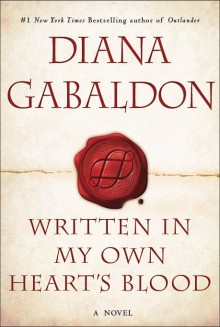
Brace yourself.  I am about to alienate the three readers I have left.  You see, one of the little reading projects I've had going on around here over the past month or so is the quest to get caught up on Diana Gabaldon's Outlander Series before she releases the (allegedly) final book in the series, Written in My Own Heart's Blood, due out in March 2014. Now I know you all are familiar with this series, even if you have never actually read the books.  Every bibliophile has at least heard about the infamous time-traveling Claire and her too-handsome-to-be-believed Scottish love Jamie Fraser.


The first novel hit bookstores in 1991 (can you believe it's been that long?) and six others have followed along with a novella and a best-not-mentioned graphic novel.  Okay.  I'm going to mention it anyway.  It was horrid.  Claire's breasts got larger and larger in each frame until I became convinced they were filling with helium and she might actually float away by the end of the book.  But hey, Gabaldon made a few million more and everyone (except the readers, that is) walked away happy.

But let's get back to the novels themselves.  Because the anticipation over Written in My Own Heart's Blood is palpable in the literary world these days and as I claw my way through novel #6, A Breath of Snow and Ashes, I find myself repeating one question over and over:  WHY?  Because frankly, dear readers, the novel I am reading here is sub par at best.  


Spoiler alert here people.  If you haven't read the books yet, chances are you never will, so get over it.  At this point in the overall plot of the series, Jamie and Claire are ensconced in pre-Revolutionary America, homesteading it up in the mountains of North Carolina with their daughter Brianna and her husband Roger. And that's pretty much all we get throughout the novel.  The only entertainment to be found is the utterly ridiculous POV changes that occur nearly every chapter.  I'm uncertain whether Gabaldon did this to entertain herself (let's face it, she had to have been bored to tears with Jamie and Claire by now, but who want to kill a cash cow?) or simply to see what she could get away with.  Either way, if the writer were anyone but Gabaldon, they would be skewered for the poor technique which leaves a reader muddled, confused, and unsatisfied.

So here I am in the middle of a book that is a complete mess with a plot that goes nowhere, jumping POVs, and sex scenes between characters that six books ago were sexy but now verge on creepy.  Any other book, I would toss it.  But it's Gabaldon.  So I soldier on.  And when I finish this one there little doubt I will bravely pick up An Echo in the Bone.  Undoubtedly, I will pre-order Written in My Own Heart's Blood.


Although I promise you this: if I see just one explicit sex scene with a geriatric Claire and Jamie, I will refuse to read another word.  Not. One. More. Word.

Ever.


From the Recovery Room

Well hello there. How is everyone?  We've missed you during our short hiatus.  Where did we go, you ask? We were under the knife.  That's right, the old major surgery excuse.  Suffice it to say that we are well on the road to our long recovery (six to eight months worth, yikes!).  

The last thing we remember seeing.

And while A Reader's Respite thought we had our initial recovery well-stocked with every book you can imagine, no one told us that all those pain medications make reading a book seem like climbing Mt. Everest.  
Reading became a tiring chore.  We lacked concentration.  We lacked interest.  Books were abandoned a mere ten pages in.  Worthy reads were callously discarded.  Blogging? Forget about it. 

It. Was. Horrible. 

We are pleased to report, however, that our ability to commit ourselves to a book is slowly (ever so slowly) returning.  Whew.  We've even read a few excellent novels which we'll tell you all about later this week. The one book, though, that stood out from the rest and took us by surprise was Hugh Howey's series of novellas, Wool.


Have you read them?  Wow.  We were riveted from the first page.  Author Hugh Howey originally published these novellas one at a time, starting in 2011, via Amazon's self publishing tool. Nowadays, they are available in an omnibus edition comprising Books 1-5 of this amazing dystopian story both in Kindle format and dead-tree version thanks to Simon & Schuster who knew a good novel when they saw one and promptly purchased the print rights to this gem.

Wool presents our world at some future point in time (exactly when remains unclear) when the Earth has become uninhabitable, at least as we experience living.  A toxic atmosphere has forced the remaining humans to live underground in a vast, ever-so-deep silo.  Don't feel too sorry for our characters, though.  They don't know how bad they have it because living in the silo is the only life anyone knows or remembers.  History, you see, didn't make it into the silos.

Howey constructs a fascinating world.  In true dystopian fashion we find a society that lives and governs itself under both the familiar and unfamiliar.  We found it riveting.  Of course, a novel needs a plot, right?  There is plenty of that, too.  Through a series of events we won't divulge here (no way are we spoiling this one for those who haven't had the pleasure yet), the inhabitants of our Silo 18 inadvertently discover they aren't alone.  There are other silos.  

While a goodly amount of action and adventure exist, Howey never once compromises character development.  Protagonists and antagonists abound and they are easy to care for (just don't get too attached to any of them).  The answers you long for - how did they get there?  what led to living in the silos?  why are the other silos kept secret? WHY? WHY? OH WHY? - are doled out in little tidbits that make the reader nearly beg for more.

We like this cover the best

Can you tell we loved this book?  Thank goodness there is more of Howey's world of silos, conveniently available in another omnibus called Shift, containing Books 6-8.  And we're not the only ones who loved this fictional world - 20th Century Fox snapped up the film rights and Ridley Scott has been rumored to direct.

Howey is a rare phenomenon - the self published author who is truly talented and deserving of a wide audience.  There is nothing amateur about this work.  A Reader's Respite is ashamed to think that this gem has been languishing on our Kindle for well over a year, unread because we have become so used to disappointment from the vast majority of self published novels.  Don't make our mistake:  read it.

Title: Wool (Omnibus Edition)
Author:  Hugh Howey
Publisher: Kindle Direct Publishing (ebook), Simon & Schuster (print)
Date:  2012
Pages: 550
Source:  Purchased

Rating:  5 Stars